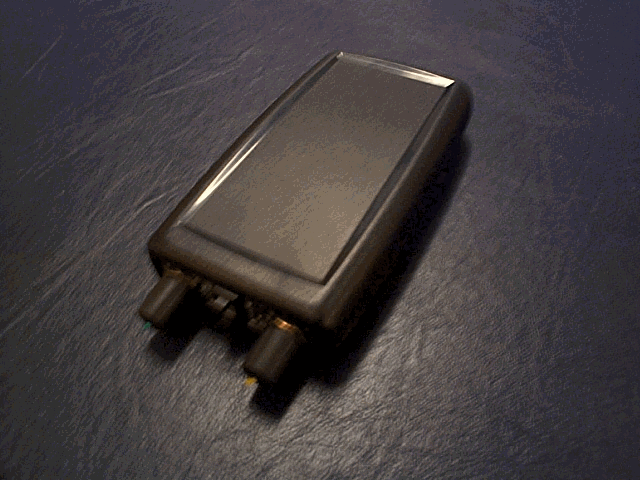
Microstim Redesign - An opportunity for improvement
The Microstim that we have been using for the last 8 years has proved to a popular stimulator for 2 channel muscle exercise. However, the design was based on the materials and ideas available at the time and our experience and user feedback suggest that it was time to make some improvements. There were also changes in some regulations that we needed to comply with which meant that we had to do some work on the ‘innards’.
Inputs to the Redesign
In our daily work with patients we quickly get to hear the likes and dislikes with regard to our equipment. The clinical staff also have their own feelings and we discuss this feedback at our regular departmental meetings. In addition we welcome remarks and criticism from colleagues and customers outside of Salisbury and feedback from the technicians here who have to deal with problems over the telephone.
The major concerns that we had to consider were:
There were also some features we wanted to add
The ‘new’ Microstim 2v2
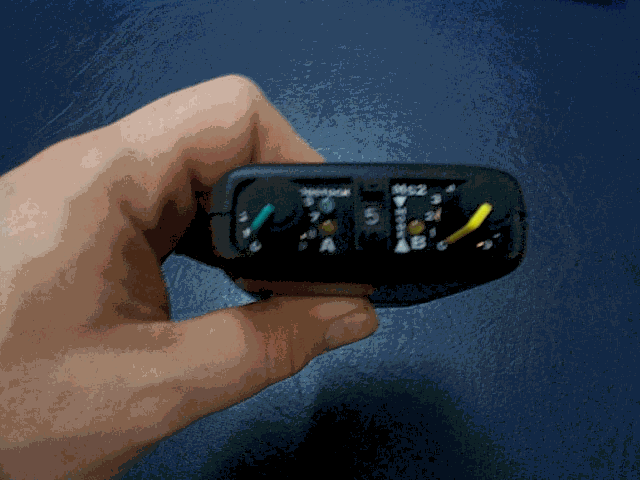
We have addressed all the features outlined above within the limitations of a standard box and off the shelf components. The new case is slimmer with a better battery compartment that incorporates spring contacts instead of the wired clip. The mode switch on the front panel has push buttons to increase and decrease the mode with a clear display. The electrode sockets are in the side of the case instead of the rear. A belt clip could be fitted but we considered that an exercise stimulator would usually be used when the person is sitting. A label on the top of the box shows which socket is which and lists the function of all the modes. When the MS2v2
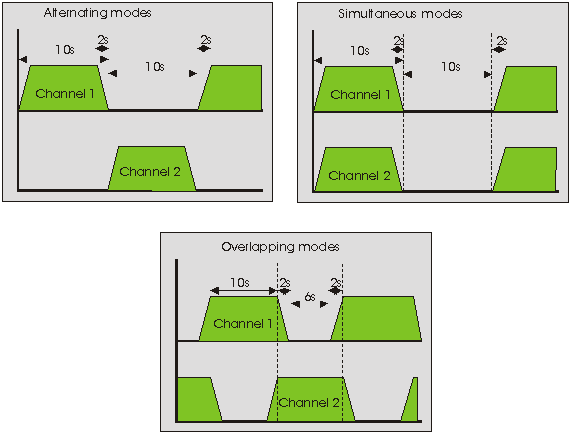
is turned on there is a long beep and then a number of short beeps equal to the mode set. Note that mode zero has zero beeps!
Mode Function
Long ramp = 6 seconds, Short ramp = 2 seconds
The software has been completely re-written to permit the overlapping output mode mentioned above. The previously unused modes (8 & 9) are now used for overlapping and the 10Hz settings have been replaced with 40Hz Alternating Simultaneous modes with a long six second ramps making them suitable for patient with high tone. The other modes use 2 second ramps, which are suitable for general use. If you require a stimulator with 10Hz modes or any other variation, please contact use and we can produce a "special" for you. The output controls are ‘smoother’ and manufacture is easier because components don’t have to be adjusted.
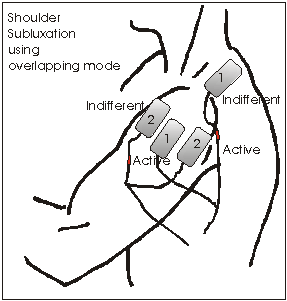
Shoulder subluxation
When using the old Microstim in its alternating mode to stimulate the deltoid and supraspinatus muscles, the humerus would rise and full with each contraction. This constant movement, while exercising the muscle effectively, may not have encouraged shortening of the muscles and therefore better long term alignment of the capsule. If two channels are used, the first exercising the middle fibres of deltoid with supraspinatus and the second exercising the anterior and posterior fibres of deltoid are alternated but with overlapping contraction periods, the humerus will be lifted and then maintained in position for the duration of the exercise period.
Conclusions
We are pleased with the way the MS2v2 has developed and the initial reaction from clinicians and patients has been favourable. Costs of manufacture are not much different to the previous version so there will be no increase in the sale price. The rewriting of the software should enable us to offer customised versions on an individual or small batch basis.
Steve Crook, Paul Taylor, Stacey Finn
